You can spend weeks teaching your dog to sit politely, walk nicely, and come when called, then watch it all unravel in tiny moments that don’t look like a big deal.
Most training doesn’t fall apart in dramatic ways. It slips in the quiet, everyday habits that feel harmless or even loving. I’ve been guilty of several of these myself, so this isn’t about perfection. It’s about noticing where things start to slide.
Here are five daily habits that quietly undo your dog’s training, along with what you can do instead.
1. Repeating Cues Until Your Dog Eventually Listens
You say “sit.”
Nothing happens.
You say it again, louder.
Still nothing.
By the fifth try, your dog finally lowers their butt, and you reward them. It feels like progress, but you may have just taught your dog that “sit” means sit on the fifth attempt.
Repeating cues over and over weakens the cue itself. Your dog learns that the first few times you speak are optional background noise.
A better approach is to say the cue once, pause to let your dog process, and if they don’t respond, reset the situation. Move a step, get their attention again, or guide them into the behavior instead of repeating the word. Reward them when they get it right. Practicing in simpler environments can also help them respond on the first try.
Clarity is not harsh. Clarity is kind.
2. Letting Manners Slide When You’re Tired or In A Hurry
Maybe your dog usually sits before you put the food bowl down, but tonight you’re exhausted and place it on the floor while they bounce around your legs. Or maybe your dog is supposed to wait at the door, but you’re running late and let them charge out.
These small exceptions add up. Dogs notice patterns far more quickly than most people realize. If the rule only applies when you’re in a good mood or have extra time, your dog will treat it as optional.
A better habit is choosing a few behaviors you’ll maintain no matter what. Sit before meals. Wait at doors until released. No pulling to reach the park gate. These rituals can stay short and simple, even when you’re tired. And on truly chaotic days, it’s okay to manage instead of train by using tools like baby gates or harnesses so your dog isn’t unintentionally rewarded for unwanted behavior.
Consistency doesn’t require hours of training. It requires honoring the basics, even when life is busy.
3. Accidentally Rewarding Jumping, Barking, or Demanding Behavior
You walk through the door and your dog jumps up. You automatically catch them, laugh, or talk to them. To your dog, that moment is a jackpot of affection.
Or your dog barks at you while you’re resting on the couch, and you toss a toy just to stop the noise. The barking worked, so they’ll use it again.
Attention is a powerful currency. Even frustrated eye contact or a quick word can act as a reward.
A better pattern is to greet calmly. If your dog jumps, remain upright, avoid eye contact, and wait. The moment all four paws are on the floor, mark it with “yes” and give them attention. For barking, look away, wait for silence, then engage once they’re calm. Teaching an alternative behavior, such as running to a mat or grabbing a toy, helps redirect their excitement into something appropriate.
You’re not ignoring your dog. You’re shifting the moment they get rewarded so they learn what earns your attention.
4. Allowing Leash Rules To Disappear During Fun Walks
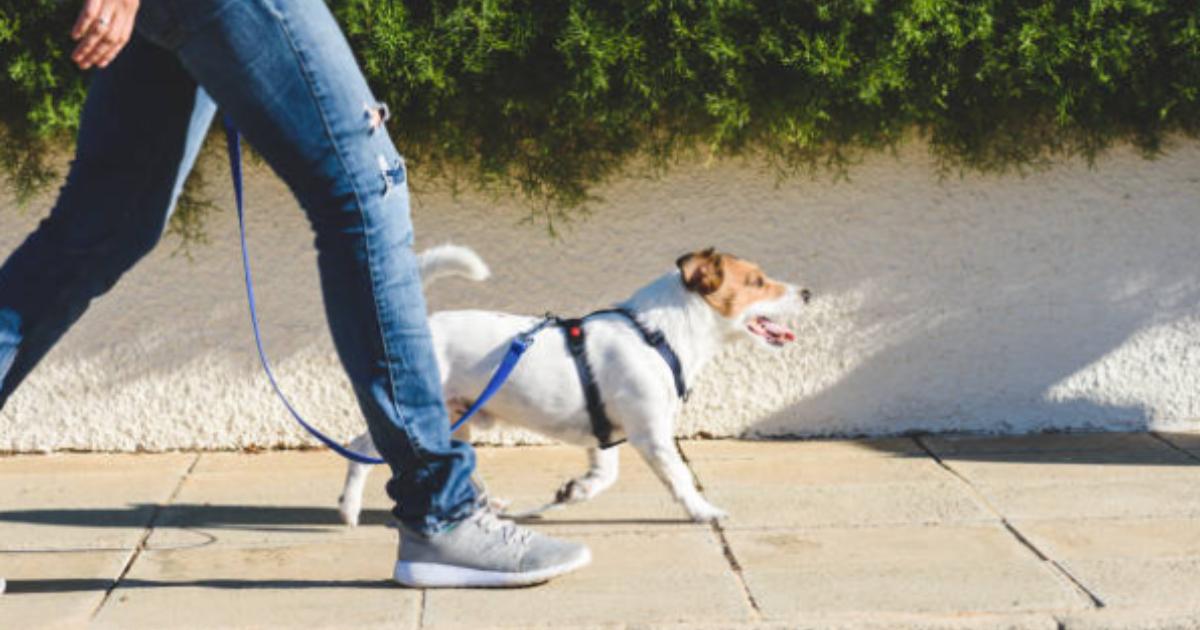
Many people have two kinds of walks: a training walk with expectations and a fun walk where the dog is allowed to pull, zigzag, and drag the human toward every smell. This feels generous, but from your dog’s point of view, it’s confusing. Same leash, same gear, same person, but completely different rules.
If pulling sometimes gets them where they want to go, pulling stays worth trying.
A clearer system is to create two simple cues. One signals “walk with me,” meaning a loose leash and calm movement. The other signals “free sniff,” where your dog can move more freely within the leash length. The important part is that a tight leash never means forward motion, and checking in with you always pays off.
You can still have relaxed, exploratory walks. Just keep one clear rule: a tight leash means we stop, and a loose leash means we go.
5. Inconsistent House Rules Between Family Members
One person in the family lets the dog on the couch. Another doesn’t. One person slips table scraps. Another insists on no feeding from the table. Someone uses one cue word, someone else uses another.
From your dog’s perspective, the rules change depending on who’s home. That makes training feel random.
Dogs don’t understand the nuance of, “Mom lets me, but Dad doesn’t.” They only notice that sometimes begging works, sometimes jumping on the furniture works, and it’s always worth trying.
A stronger approach is sitting down as a family and agreeing on the basics. Is the dog allowed on furniture? Are treats given at the table or not? Which cue words will everyone use? Writing it down might feel unnecessary, but it gives everyone the same roadmap, and backing each other up makes training far more effective.
When the humans unite, the dog learns faster and feels more relaxed because the rules finally make sense.
Bringing Everything Together
Most people aren’t undoing their dog’s training on purpose. They’re simply unaware of how ordinary daily moments teach powerful lessons.
If you take one idea from this article, let it be this:
Training isn’t just what happens during a session. Training is happening all the time.
Every time your dog hears a cue, pulls on the leash, greets someone, or asks for attention, they’re gathering information. Your reaction teaches them what works.
Choose one habit from this list to adjust this week. Maybe you stop repeating cues. Maybe you commit to calmer greetings. Maybe you get the whole household on the same page.
Small, steady changes protect all the work you’ve already put into your dog’s training and help your dog feel more confident, secure, and understood in your home.